
Blog / Car Accidents

Blog

All Car Accidents Criminal Defense Personal Injury Firm News Wrongful Death Frasier & Griffin Service Court Fees
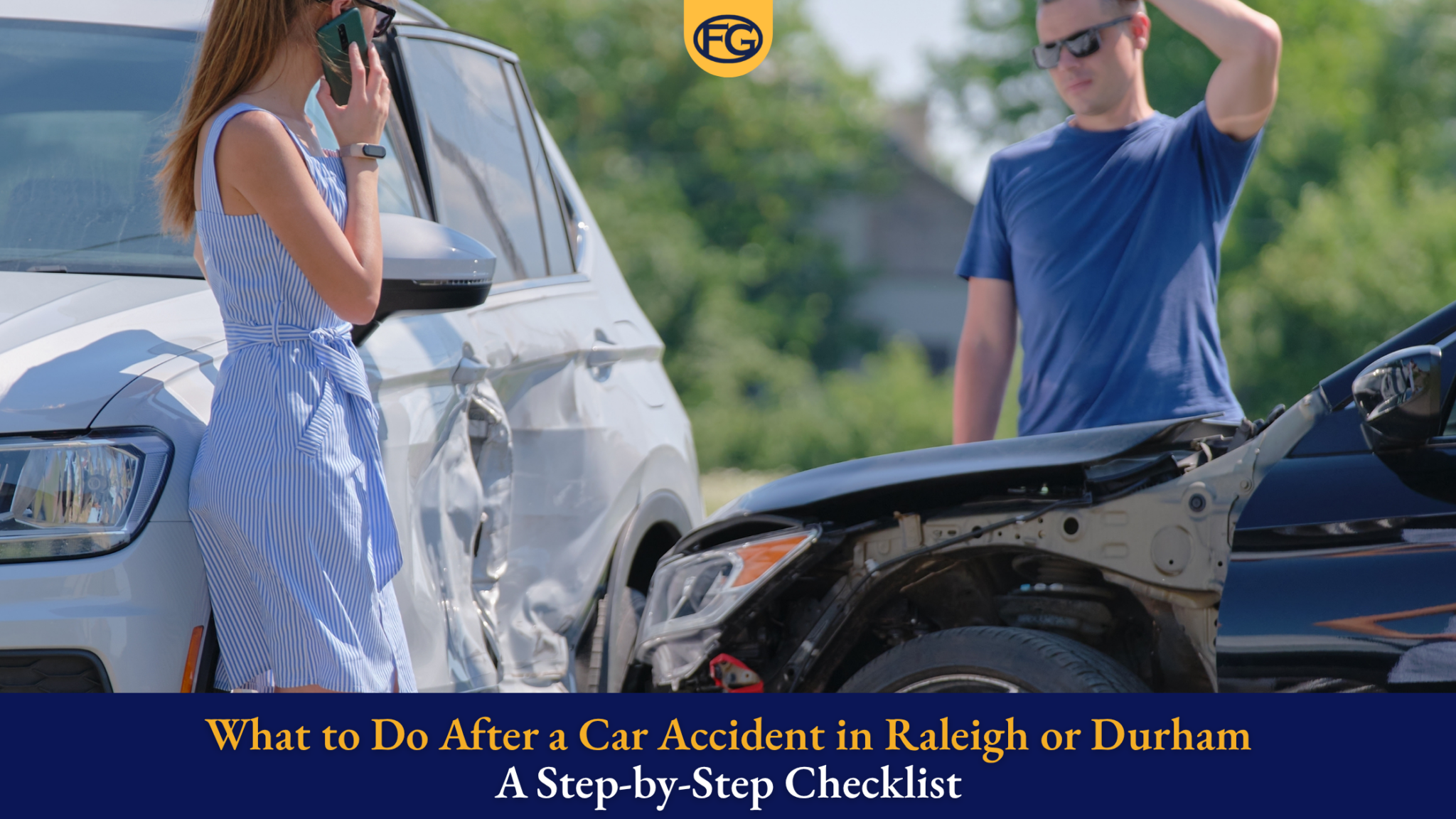
What to Do After a Car Accident in Raleigh or Durham: A Step‑by‑Step Checklist

What to Do After a Car Accident in or : A Step-by-Step Checklist That Protects Your Health and Your Claim

A crash can turn into a second emergency the moment you start getting calls from insurance adjusters, tow companies, and repair shops—while you’re still in pain, still shaken, and still trying to figure out what happens next. This checklist is written for people in the Triangle area who want to protect their health and reduce the risk of mistakes that can hurt an injury claim. It’s general information—not legal advice. For advice on your specific situation, talk with a lawyer as soon as possible. Need help now? Frasier & Griffin has offices in Durham and Raleigh and offers in-person consultations (and can accommodate phone or Zoom appointments). Call 919-680-4039 or use the site’s contact form to request a consultation. Immediate steps at the scene Get to safety, then call for help If you can move without worsening injuries, get yourself (and others) out of danger. If vehicles can be moved and doing so is safe, move out of active lanes to reduce the risk of a secondary collision. North Carolina law includes duties to stop after a crash and to provide identifying information and reasonable assistance to injured people. Taking the situation seriously at the scene matters—not just medically, but legally. Call 911 and request law enforcement In North Carolina, the driver of a vehicle involved in a reportable crash must immediately notify the appropriate law enforcement agency. “Reportable” can include crashes involving injury/death or certain property damage thresholds (commonly referenced at $1,000) and other defined categories. Even when you believe injuries are “minor,” it’s often wise to involve law enforcement so the event is documented while details are fresh. Exchange information, but don’t argue fault Collect the basics: Names, contact information, driver’s license numbers Vehicle and insurance information Tag numbers and vehicle descriptions Be careful about apologies or speculative statements (“I didn’t see you,” “I was distracted,” “I’m fine”). In North Carolina, fault issues can be especially high-stakes because contributory negligence defenses can turn small “admissions” into major claim disputes later. Photograph the scene and preserve evidence If it’s safe, get photos of: Vehicle positions before they move (if possible) Damage to all vehicles Skid marks, debris fields, and road conditions Traffic signals/signage and lighting conditions Visible injuries (as appropriate) If there are witnesses, ask for names and contact information. If you’re unsure what to document, call 919-680-4039 and ask for a free case review —getting the evidence plan right early can matter. The first 24–72 hours after the crash Get medical care promptly and follow through If you are transported from the scene, keep discharge papers and follow-up instructions. If you do not go to the ER/urgent care that day, consider being evaluated promptly anyway—some injuries (including neck/back pain, headaches, or joint injuries) can worsen after adrenaline fades. Keep a simple timeline: When symptoms began How they changed over time Any missed work or activity limitations Start a “claim file” you can actually use later Create a dedicated folder (paper or digital) for: Photos and videos Medical records and receipts Medication and treatment logs Vehicle repair estimates and towing bills A short daily journal of pain and limitations This is not about “building a case” in a dramatic sense—it’s about ensuring the documentation exists if liability or damages are disputed. Be cautious with insurance communications Insurance companies may contact you quickly. You can report basic facts, but think twice before giving a recorded statement—especially if you’re unsure about details or still seeking medical evaluation. In a contributory negligence jurisdiction, “gray area” statements can become leverage against you later. Get the official crash report In North Carolina, crash reports are regulated records. If you were personally involved in a crash, the North Carolina DMV explains that you can order a redacted copy in person or by mail (individuals generally cannot order online). This report can be important for identifying parties, insurers, and the initial incident record. How North Carolina rules can affect your claim Contributory negligence can change everything North Carolina is one of the jurisdictions that still follows the contributory negligence rule. In general terms, if the plaintiff is even slightly at fault, they may be unable to recover compensation from the defendant. This is one reason why early evidence matters: photos, witness names, a clear medical timeline, and careful communication. Related point: under G.S. 1-139, the party asserting contributory negligence carries the burden of proof on that defense. Deadlines matter North Carolina’s civil time limits can be strict. G.S. 1-52 sets a three-year limitations period for many claims and includes provisions addressing personal injury/property damage accrual. Wrongful death actions (under G.S. 1-53(4)) are subject to a two-year limitations period, with specific statutory language about accrual. Because exceptions and fact-specific issues can apply, it’s safer to talk to an attorney early rather than “wait and see.” What compensation may be available in a serious injury claim Every case is different, but personal injury claims commonly involve one or more of the following categories: Medical expenses (current and future) Lost income and reduced earning capacity Pain and suffering and loss of enjoyment of life Out-of-pocket costs (medications, mileage, medical equipment) If a crash results in a fatality, the firm’s wrongful death page describes categories that may be part of a wrongful death case, such as funeral/burial costs, certain medical bills, and other losses tied to the death. Wrongful Death When to talk to a lawyer You don’t need to “wait until it gets worse” to get legal guidance. Consider speaking with a lawyer quickly if any of these are true: You have significant pain, progressive symptoms, or a new diagnosis You missed work (or expect to) because of the crash The other driver disputes fault You were hit by a commercial vehicle (delivery truck, semi, work vehicle) An insurer pushes for a fast settlement before your treatment stabilizes Frasier & Griffin’s personal injury practice includes motor vehicle collisions (car, truck, motorcycle) and wrongful death, and the firm uses a contact-first intake flow to get people connected to an attorney. The firm also states on its motorcycle accident page that initial consultations are free and that clients do not owe attorney fees unless compensation is recovered. Start a confidential case review through the contact form or call 919-680-4039. In-person consultations are available, and phone/Zoom appointments can be accommodated. https://frasierandgriffin.com/car-accidents/ https://frasierandgriffin.com/truck-accidents/ https://frasierandgriffin.com/motorcycle-accidents/ https://frasierandgriffin.com/case-results/ FAQ Do I have to call the police after a car accident? If a crash is “reportable,” North Carolina law requires the driver to notify the appropriate law enforcement agency immediately. The definition of “reportable” can include injury/death and certain property-damage thresholds. How do I get a copy of the crash report? The North Carolina DMV explains that people personally involved in a crash can order a redacted crash report in person or by mail (not online for individuals). How long do I have to file? North Carolina statutes include a three-year limitations framework in G.S. 1-52 for many claims and a two-year limitations period for wrongful death under G.S. 1-53(4). Because deadlines can be affected by details of the case, ask a lawyer early. Why does “fault” matter so much in North Carolina? North Carolina uses contributory negligence, which can bar recovery if the claimant is found even slightly at fault. That’s why evidence, careful statements, and a clear medical timeline can be critical. If you were hurt in a crash and you’re not sure what to do next, get help before the insurance process picks your path for you. Call 919-680-4039 for a consultation or send a message through the contact page. Offices are located at 4400 Falls of Neuse Road, Suite 102, Raleigh, NC 27609 and 100 East Parrish St, Suite 350, Durham, NC 27701.
Types of vehicles most commonly associated with drunk driving

Most road users are likely aware that drunk driving is a major public safety concern. Many motorists have encountered devastating accidents and sustained catastrophic injuries due to drunk driving. For this reason, it is important to raise awareness about the factors that contribute to driving under the influence. Understanding the types of vehicles most commonly associated with drunk driving is a good place to start. Passenger cars Passenger cars are the vehicles most associated with drunk driving incidents. This is primarily because they make up the largest share of vehicles on the road. These vehicles include sedans, hatchbacks and SUVs. Passenger vehicles are typically used for daily commutes, social gatherings and leisure activities. These situations happen to be where alcohol consumption might be more prevalent. Younger drivers in passenger cars are particularly prone to DUIs, often due to peer pressure, lower experience levels or a higher tendency to underestimate the risks of driving under the influence. Younger drivers might not understand just how quickly alcohol can slow down their reaction times, compromise their decision-making and undermine their coordination. Pickup trucks Pickup trucks are frequently linked to DUI cases because drivers of these vehicles are often involved in late-night activities and live in rural settings. In such activities and areas, alcohol use tends to be more common. Male drivers, particularly those in their 20s and 30s, statistically dominate DUI cases involving pickup trucks. The association may be, in part, due to cultural perceptions, as pickups are often linked with rugged, carefree lifestyles.  Such lifestyles may be linked to risk-taking behavior, including drinking and driving. Motorcycles Motorcycles are also disproportionately associated with fatal drunk driving accidents. Motorcycles have unique risks due to their lack of protective structures and the precision required to operate them safely. Even small amounts of alcohol can severely impact a motorcyclist’s ability to maintain balance, respond to road hazards and make quick decisions. Riders under the influence are less likely to wear helmets or adhere to traffic laws. Such reckless behavior further increases the severity of a crash. The culture surrounding motorcycles, including social gatherings like biker rallies, may also contribute to higher rates of drinking and riding. No matter what vehicle an individual drives, they have the responsibility to consider the safety of other road users when they get behind the wheel. Therefore, when a driver operates their vehicle while under the influence of alcohol, they should be held accountable for any damages caused.

How serious is the risk of a back injury from a crash?

The force of a car accident can leave individuals facing serious injuries, whether it was a rear-end collision or a head-on collision. And it is this force and the jarring movement that can also cause serious damage to one’s back muscles – or their spinal cord. Back injuries are some of the most common injuries that result from a car accident, but many people might wonder just how serious these injuries can be. What kinds of back injuries can a crash cause? Some of the most common back injuries resulting from an accident include: Whiplash: While many people associate whiplash with the neck, it can also affect the upper back and spinal cord, and limit one’s ability to move. Herniated disks: This is when the disks between the vertebrae – or the bones in the spinal cord – are out of place. This can cause pain or numbness in one’s back, but also their legs or arms. Muscle sprains: While sprains and strains in the back muscles are not often serious injuries, they are common. They limit movement and cause individuals pain while they recover from a car accident. Injuries to the back can affect one’s life much more than they think, especially with how much they can restrict movement. While these injuries listed above often can heal overtime with a lot of rest, there are other back injuries that can have much more serious effects. How common are spinal cord injuries? Mayo Clinic reports that motor vehicle accidents are the most common cause of spinal cord injuries across the country. Collisions that result in spinal cord injuries only make up a small percentage of all accidents, but they still pose a serious risk. This is because spinal fractures or other spinal injuries can cause considerable damage and have lifelong effects. The most serious spinal cord injuries can result in paraplegia or quadriplegia, but even acute spinal cord injuries can significantly decrease movement and require physical therapy to regain function. Watch out for symptoms – and see a doctor immediately Back pain and injuries can affect nearly every aspect of one’s daily life, whether they are temporary or long-term. This is why it is important for individuals not to overlook any back pain after an accident – even if they believe the collision was minor. That is also the reason why it is so critical to seek medical treatment as soon as possible after a crash on North Carolina roads. Sometimes, the signs and symptoms of back injuries might not appear right away. However, seeking medical treatment can ensure the cause of an injury is documented, while also making sure individuals get the care they need immediately.

Are rideshares reducing car accidents?

Rideshare services are a convenience that many people enjoy, whether they are exploring a new city or traveling around their own hometown. Many people take advantage of these services since they can call a ride directly from an app. Ridesharing might be incredibly useful, but it is important for North Carolina passengers to note that safety reports regarding rideshares vary – and even contradict each other. Conflicting studies about rideshares and accidents Even as the popularity of ridesharing continues to increase, the chance of an accident remains. Most road users are aware of this risk, but it seems that studies cannot agree on how much of a risk passengers face in a rideshare. For example, two different studies determined that: Rideshares are reducing accidents: A recent report based on data from Houston, Texas, indicates that the increased use of rideshares reduces the number of collisions. The primary reason for this decrease is that rideshares offer individuals a way home after a night out that does not involve driving under the influence. The study found that using rideshares decreased the rate of accidents by 3% for every 1,000 rides. But rideshares also cause accidents: On the other hand, a 2018 study reported that rideshare services also contributed to an increase in accidents. According to the University of Chicago and Rice University, rideshare accidents increased traffic fatalities between 2% and 3%. The studies’ findings might vary, but it is important to be aware of both of them. Safety should always come first, and understanding the risks of the road is the first step to prioritizing it. What can passengers do? None of this information is to say individuals should not use rideshare services. However, they should take great care whenever they get into a vehicle, whether they are a driver or passenger. If using a rideshare service, it is critical to: Be aware of the most common causes of rideshare accidents, namely distracted driving and fatigue Check the driver’s rating each time they hail a ride Always wear a seatbelt, as simple as it might sound Politely ask drivers to avoid distractions, such as using their phone or GPS, while driving It is also critical for individuals to remember that there is legal recourse for passengers who suffer injuries in a rideshare accident. Even so, both drivers and passengers can take steps to make their rides safe.

How much does weather affect the risk of accidents?

Driving in the rain can be a hassle. However, it is critical to remember that changes in weather conditions also mean changes in road conditions. Even if North Carolina motorists take more care behind the wheel when it rains, it is still common to wonder: just how dangerous is it to drive in the rain? The short answer? Quite a bit. A 2019 study found that the chance of being in a fatal accident increases significantly when it rains. The results indicated that the risk of an accident rose: By 27% even in a light rain By 34% in rainy, snowy or icy conditions For drivers in North Carolina, the biggest risk is the rain. And according to the Federal Highway Administration, most weather-related crashes occurred when it was raining or on wet roads. What are the biggest risks of bad weather? The researchers who conducted the 2019 study indicated that some risks stemmed from drivers underestimating the danger of bad weather. Particularly when driving in a drizzle or light rain, it is common for drivers to misjudge the risk. They might only believe it is dangerous to drive when it is raining heavily. However, rainy conditions also create risks that drivers cannot control, but should take into account to stay safe. These particular risks include: Reduced visibility, which is already a common risk factor on the road, and makes it even more important to turn headlights on Reduced traction, which can increase stopping distances considerably and make it easier to lose control if speeding There is another hazard as well. Like with distracted driving, even if an individual takes precautions to drive safely and defensively when it rains, other drivers might not. Those drivers still pose a risk on the road. No matter the weather, drivers must always be alert to avoid serious accidents.

Study: Two factors put women at greater injury risk in crashes

There are about 228 million drivers in the U.S., divided in half almost exactly between men and women. The equity doesn’t extend to motor vehicle crashes involving injuries, however. According to a recent study by the Insurance Institute for Highway Safety (IIHS), women are much more likely than men to sustain serious injuries in crashes. The IIHS says two main factors contribute to the difference between genders in injury risk: vehicle choice and circumstances of the wrecks. Diving into the data The organization crunched the injury statistics from police-reported front- and side-impact wrecks from 1998 to 2015. The data shows that women were from 37 percent to 73 percent more likely to suffer serious injuries. Women were also from 20 percent to 28 percent more likely to die in crashes. Jessica Jermakian, vice president of vehicle research at the IIHS, said, “The numbers indicate that women more often drive smaller, lighter cars and they’re more likely than men to be driving the struck vehicle in side-impact and front-into-rear crashes.” Injury types Researchers found that in front-impact collisions, women were three times more likely than men to sustain a moderate injury such as a concussion or broken bone. Women are twice as likely in those crashes to sustain a serious injury such as a traumatic brain injury or collapsed lung. In side-impact collisions, women were about 50 percent more likely to sustain a serious injury. The risk of moderate injuries was about the same for both genders. Vehicle choice and more The IIHS found that about 70 percent of women were in crashes while driving cars, compared to 60 percent of men. More than 20 percent of men were in crashes while driving pick-ups, the IIHS said, compared to less than 5 percent of women. Within the vehicle classes, men tended to drive heavier vehicles, which previous research has shown offer more protection in wrecks. In an analysis of crash data from the Fatality Analysis Reporting System, researchers found that in front-to-rear and front-to-side collisions, women are more likely to be driving the struck vehicle. Because drivers of striking vehicles are less likely to be injured than the driver of the struck vehicle, researchers believe that is also a factor in the difference in crash outcomes for women and men. Statistics and studies are informative, but if you have suffered an injury in a crash in the Raleigh and Durham area, your focus will be on how to fully recover both physically and financially.

Oct. devoted to pedestrian safety. What about year-round safety?

It is no secret that pedestrians are one of the groups most at risk on the road. Compared to steel-built vehicles, they are extremely vulnerable to suffering severe or fatal injuries in even a minor accident. The Governors Highway Safety Association (GHSA) established this October as the first National Pedestrian Safety Month. And even though October has come and gone, it is still critical to highlight the importance of pedestrian safety. After all, the focus on safety should continue long after October ends. So, how can pedestrians stay aware – and safe? All road users have a duty to each other to make North Carolina roads safer. And even though it is up to both drivers and pedestrians alike to be defensive and assure safety, pedestrians cannot always rely on drivers to be aware of them. Therefore, pedestrians should take action to keep themselves safe. For example, pedestrians should: Not assume drivers see them: Visibility is a significant issue in many pedestrian accidents. Research into motorcycle accidents indicates that drivers automatically look for other vehicles – not smaller road users such as motorcyclists or pedestrians. Even if they wear bright clothing, like runners and bicyclists often do, drivers often do not see them. Avoid all distractions: It might surprise many people that distracted walking is becoming a large risk on the road as well as distracted driving. Texting, eating or even listening to music can distract pedestrians from their surroundings and oncoming vehicles. Follow the rules: There are traffic laws and crosswalks in place for a reason. They are meant to help pedestrians stay safe. Pedestrians should still watch out for reckless drivers disregarding the rules, but they should also make sure they adhere to the rules themselves. Even with several campaigns in North Carolina and across the country to reduce accidents as well as the number of negligent drivers, the road still involves considerable risks for pedestrians both during October and throughout the year. However, if pedestrians take steps to stay aware and vigilant, they can avoid such risks.

Why is distracted driving so common among teens?

Distracted driving is a rampant risk on roads across the country. And many people have heard it is especially common for teens to engage in distractions – especially when it comes to using their cellphones while driving. Even though North Carolina has laws specifically prohibiting even the hands-free use of cellphones for drivers under 18, it is often difficult to enforce these laws and prevent teens from driving distracted. So, why do teens drive distracted? Often, teens are aware that texting while driving is dangerous. And yet, they are still more likely to engage in these behaviors. There are a few reasons why distracted driving is so prevalent among teen drivers, including: According to the National Highway Traffic Safety Administration (NHTSA), a teen’s inexperience makes them more likely to engage in distractions, as they do not fully understand the risks of the road yet. Teens’ brains are still developing, which could lead them to make risky decisions even if they know there is danger involved. And several studies have found some people are even addicted to their cellphones, leading teens to reach for their phones even when behind the wheel. Also, many people who text and drive simply believe that they can do it safely. How can parents prevent teens from driving distracted? Teens long for the independence that driving brings them, but parents will always worry about their child’s safety. Hearing about the prevalence of teen distracted driving often only increases that worry. Thankfully, there are ways that parents can help to mitigate distracted driving. Parents should: Make their expectations that children drive safely clear Instill the seriousness and consequences of distracted driving Avoid using their own phone while they drive, to set an example The sooner teens form the habits of safe driving, the more they reduce their chance of being involved in a serious auto accident that could change their lives.

Pain and suffering: Can you receive compensation?

If a car accident on North Carolina roads leaves an individual with a severe injury, it can change his or her entire life. A broken leg, head injury or back injury can take a long time to heal. All the while, it can prevent individuals from working or participating in their favorite activities. In a recent blog post, we discussed how the effects of a car crash injury can impact one’s mental health as well. The physical and emotional impacts of such injuries can be overwhelming. However, individuals can recover compensation for this long-lasting pain. Collecting compensation for pain and suffering It is common to hear the phrase “pain and suffering” in these cases, but what does it really mean? The term encompasses the distress, pain and trauma that individuals may experience after an injury or accident – at both the physical and mental levels. North Carolina law allows individuals to collect financial damages for the pain and suffering they face after an accident. However, calculating the amount of damages for pain and suffering is not always easy. Injured individuals often can collect economic damages, including: Medical expenses; Lost wages; and Property damage. These three types of damages have a financial value, where non-economic damages like pain and suffering do not. So, how do you determine pain and suffering damages? Calculating the damages for pain and suffering first requires individuals to provide proof of the physical and mental distress they experienced. After all, these damages are subjective to each individual’s situation. To prove pain and suffering, individuals should: Document how the injuries impact their daily life, including one’s relationships; Write down all symptoms they experience, such as symptoms of depression; Obtain testimonies from health professionals who treated and diagnosed them; and Keep a record of all the treatment they receive, including the medications they take. It can be tough to relive these difficult experiences as well as share them with the court, but it is critical that individuals do not leave out any details in their records. All of these details are important to help attorneys and courts determine how the accident impacted an individual’s life, quantify their pain and suffering and ensure they receive the full and fair compensation they deserve.

A car crash can impact your mental health too

A car accident on North Carolina roads can lead to more than just physical injuries. Physical injuries may require the most immediate attention, and they can have a considerable impact on an individual’s life. However, it is common for individuals to suffer emotional trauma and distress after an accident as well. So, what should individuals know about how a crash could affect their mental health? What should you expect after a car accident? According to the Anxiety and Depression Association of America (ADAA), not many people consider car accidents to be traumatic experiences – but they often are. Individuals might not register the trauma immediately, but it can have a significant effect long after the accident. Everyone copes differently after a life-threatening accident. However, it is common for people to experience symptoms of anxiety and depression. For example, individuals might: Feel low or even guilty about the accident, especially if others were in the vehicle; Have trouble sleeping or relaxing; Experience high levels of stress; Fear driving or even getting near a vehicle again; and Worry excessively about friends or family members when they must drive. This emotional trauma is very real – and it is as real as any physical injury individuals might sustain. Individuals should watch out for these symptoms in their loved ones after a car accident. PTSD is possible in some cases Severe car crashes could also lead individuals to suffer from post-traumatic stress disorder (PTSD). If individuals feared for their lives, or the accident was particularly violent, PTSD is not uncommon. This might lead individuals to: Experience intrusive memories of the accident; Exhibit extreme avoidance behaviors; Feel irritable, in addition to severe mood swings; and Distance themselves from their friends and family. These symptoms might reduce over time. However, if they continue and interfere with one’s daily life, it might be beneficial to consult a mental health expert to ease the pain and suffering after the accident.

Do driver assistance technologies really help to prevent accidents?

Nowadays, most new vehicles on North Carolina roads come with driver assistance technologies. The purpose of these technologies is to reduce – or even avoid – auto accidents. This might lead many people to wonder: Is this technology really helping to reduce crashes? Driver assistance technologies are meant to prevent accidents Common driver assistance technologies include, but are not limited to: Forward collision warning Lane departure warning Automatic emergency braking All of these technologies use sensors to detect objects and warn the driver before a collision occurs. For example, forward collision warnings often work in coordination with automatic emergency braking. If the sensors detect a vehicle in front of the car, they alert the driver to the obstacle, and then also begin to slow the vehicle. This may sound beneficial, but several studies have led many to question how well these technologies work to improve safety. Are these technologies effective? There are conflicting reports over how well driver assistance technologies help a driver avoid an accident. For example, two separate studies from the AAA Foundation for Traffic Safety determined that: Drivers often rely too much on assistive technologies, with 25% of drivers stating they feel comfortable relying totally on blind-spot monitoring technologies and forward collision warning systems, instead of checking their own blind spots. Driver assistance technologies meant to detect pedestrians are also still not effective. These technologies often cannot detect children running into the road, with a collision happening 89% of the time in testing. They also could not detect any pedestrian, adult or child, at night. These are two of the most common risk factors in pedestrian accidents, and these technologies are not helping to reduce these risks. The findings from these studies do not mean that driver assistance technologies are not useful. It is important to note that these technologies are still developing. They certainly are helpful, but they are only an added layer of protection. Drivers cannot rely solely on these assistive technologies to avoid an accident and stay safe on the road.

Three common risk factors of motorcycle accidents

The arrival of the summer season often brings even more motorcycles to North Carolina roads. Most experienced motorcyclists are aware that they face risks every time they go for a ride. After all, motorcycles do not offer as much protection as other vehicles, such as cars or trucks. That is why it is important for all motorcyclists – as well as all motorists, for that matter – to be aware of some of the most dangerous situations that motorcyclists face on the road. What circumstances increase the risk of a motorcycle accident? There are several circumstances that can cause motorcycle accidents, but some of the most common risks include: Drivers not seeing motorcyclists: The most common issue that motorcyclists face is visibility. A motorcycle’s smaller size means it often disappears in a vehicle’s blind spots. Therefore, the National Safety Council reports that one of the primary causes of an accident is drivers not seeing motorcyclists. Other drivers often engage in distractions behind the wheel, and they are used to looking for larger vehicles – not motorcycles. This oversight can lead drivers to turn left in front of motorcycles or change lanes and collide with them. Road conditions: Poor road conditions, such as potholes, and gravel or grass clippings on blind corners, can make operating a motorcycle significantly more difficult – and dangerous. Gravel and grass reduce traction and lead motorcyclists to lose control of their vehicles. Weather can also affect road conditions, as rain makes the roads slick. Additionally, rainy or foggy weather can also make it even more challenging for other drivers to see motorcyclists. Alcohol: An unfortunately high rate of motorcycle accidents involve alcohol-impaired riders. In 2017, 33% of all motorcycle fatalities were the result of alcohol impairment. While alcohol often plays a part in motorcycle culture, it is critical that motorcyclists put their safety first and avoid drinking and riding. All motorists have a duty to drive defensively and safely. And it is up to both drivers and motorcyclists to be safe, so they can share the road and decrease the risk of a serious accident.

Contact Us

Fill out this form below and we'll contact you shortly
*Required Fields