Blog / Firm News

Blog

All Firm News Criminal Defense Personal Injury Car Accidents Wrongful Death Frasier & Griffin Service Court Fees
What to Do After a Car Accident in Raleigh or Durham: A Step‑by‑Step Checklist

What to Do After a Car Accident in or : A Step-by-Step Checklist That Protects Your Health and Your Claim

A crash can turn into a second emergency the moment you start getting calls from insurance adjusters, tow companies, and repair shops—while you’re still in pain, still shaken, and still trying to figure out what happens next. This checklist is written for people in the Triangle area who want to protect their health and reduce the risk of mistakes that can hurt an injury claim. It’s general information—not legal advice. For advice on your specific situation, talk with a lawyer as soon as possible. Need help now? Frasier & Griffin has offices in Durham and Raleigh and offers in-person consultations (and can accommodate phone or Zoom appointments). Call 919-680-4039 or use the site’s contact form to request a consultation. Immediate steps at the scene Get to safety, then call for help If you can move without worsening injuries, get yourself (and others) out of danger. If vehicles can be moved and doing so is safe, move out of active lanes to reduce the risk of a secondary collision. North Carolina law includes duties to stop after a crash and to provide identifying information and reasonable assistance to injured people. Taking the situation seriously at the scene matters—not just medically, but legally. Call 911 and request law enforcement In North Carolina, the driver of a vehicle involved in a reportable crash must immediately notify the appropriate law enforcement agency. “Reportable” can include crashes involving injury/death or certain property damage thresholds (commonly referenced at $1,000) and other defined categories. Even when you believe injuries are “minor,” it’s often wise to involve law enforcement so the event is documented while details are fresh. Exchange information, but don’t argue fault Collect the basics: Names, contact information, driver’s license numbers Vehicle and insurance information Tag numbers and vehicle descriptions Be careful about apologies or speculative statements (“I didn’t see you,” “I was distracted,” “I’m fine”). In North Carolina, fault issues can be especially high-stakes because contributory negligence defenses can turn small “admissions” into major claim disputes later. Photograph the scene and preserve evidence If it’s safe, get photos of: Vehicle positions before they move (if possible) Damage to all vehicles Skid marks, debris fields, and road conditions Traffic signals/signage and lighting conditions Visible injuries (as appropriate) If there are witnesses, ask for names and contact information. If you’re unsure what to document, call 919-680-4039 and ask for a free case review —getting the evidence plan right early can matter. The first 24–72 hours after the crash Get medical care promptly and follow through If you are transported from the scene, keep discharge papers and follow-up instructions. If you do not go to the ER/urgent care that day, consider being evaluated promptly anyway—some injuries (including neck/back pain, headaches, or joint injuries) can worsen after adrenaline fades. Keep a simple timeline: When symptoms began How they changed over time Any missed work or activity limitations Start a “claim file” you can actually use later Create a dedicated folder (paper or digital) for: Photos and videos Medical records and receipts Medication and treatment logs Vehicle repair estimates and towing bills A short daily journal of pain and limitations This is not about “building a case” in a dramatic sense—it’s about ensuring the documentation exists if liability or damages are disputed. Be cautious with insurance communications Insurance companies may contact you quickly. You can report basic facts, but think twice before giving a recorded statement—especially if you’re unsure about details or still seeking medical evaluation. In a contributory negligence jurisdiction, “gray area” statements can become leverage against you later. Get the official crash report In North Carolina, crash reports are regulated records. If you were personally involved in a crash, the North Carolina DMV explains that you can order a redacted copy in person or by mail (individuals generally cannot order online). This report can be important for identifying parties, insurers, and the initial incident record. How North Carolina rules can affect your claim Contributory negligence can change everything North Carolina is one of the jurisdictions that still follows the contributory negligence rule. In general terms, if the plaintiff is even slightly at fault, they may be unable to recover compensation from the defendant. This is one reason why early evidence matters: photos, witness names, a clear medical timeline, and careful communication. Related point: under G.S. 1-139, the party asserting contributory negligence carries the burden of proof on that defense. Deadlines matter North Carolina’s civil time limits can be strict. G.S. 1-52 sets a three-year limitations period for many claims and includes provisions addressing personal injury/property damage accrual. Wrongful death actions (under G.S. 1-53(4)) are subject to a two-year limitations period, with specific statutory language about accrual. Because exceptions and fact-specific issues can apply, it’s safer to talk to an attorney early rather than “wait and see.” What compensation may be available in a serious injury claim Every case is different, but personal injury claims commonly involve one or more of the following categories: Medical expenses (current and future) Lost income and reduced earning capacity Pain and suffering and loss of enjoyment of life Out-of-pocket costs (medications, mileage, medical equipment) If a crash results in a fatality, the firm’s wrongful death page describes categories that may be part of a wrongful death case, such as funeral/burial costs, certain medical bills, and other losses tied to the death. Wrongful Death When to talk to a lawyer You don’t need to “wait until it gets worse” to get legal guidance. Consider speaking with a lawyer quickly if any of these are true: You have significant pain, progressive symptoms, or a new diagnosis You missed work (or expect to) because of the crash The other driver disputes fault You were hit by a commercial vehicle (delivery truck, semi, work vehicle) An insurer pushes for a fast settlement before your treatment stabilizes Frasier & Griffin’s personal injury practice includes motor vehicle collisions (car, truck, motorcycle) and wrongful death, and the firm uses a contact-first intake flow to get people connected to an attorney. The firm also states on its motorcycle accident page that initial consultations are free and that clients do not owe attorney fees unless compensation is recovered. Start a confidential case review through the contact form or call 919-680-4039. In-person consultations are available, and phone/Zoom appointments can be accommodated. https://frasierandgriffin.com/car-accidents/ https://frasierandgriffin.com/truck-accidents/ https://frasierandgriffin.com/motorcycle-accidents/ https://frasierandgriffin.com/case-results/ FAQ Do I have to call the police after a car accident? If a crash is “reportable,” North Carolina law requires the driver to notify the appropriate law enforcement agency immediately. The definition of “reportable” can include injury/death and certain property-damage thresholds. How do I get a copy of the crash report? The North Carolina DMV explains that people personally involved in a crash can order a redacted crash report in person or by mail (not online for individuals). How long do I have to file? North Carolina statutes include a three-year limitations framework in G.S. 1-52 for many claims and a two-year limitations period for wrongful death under G.S. 1-53(4). Because deadlines can be affected by details of the case, ask a lawyer early. Why does “fault” matter so much in North Carolina? North Carolina uses contributory negligence, which can bar recovery if the claimant is found even slightly at fault. That’s why evidence, careful statements, and a clear medical timeline can be critical. If you were hurt in a crash and you’re not sure what to do next, get help before the insurance process picks your path for you. Call 919-680-4039 for a consultation or send a message through the contact page. Offices are located at 4400 Falls of Neuse Road, Suite 102, Raleigh, NC 27609 and 100 East Parrish St, Suite 350, Durham, NC 27701.

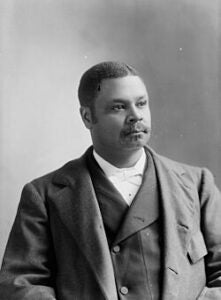
A Warning Then and Now: George H. White’s 1901 Farewell Address to Congress.

A Warning Then and Now: George H. White’s 1901 Farewell Address to Congress.

Please join us on Thursday, February 19, 2026, from 6:00–8:00 PM at the Chapel Hill Public Library for a timely and thought-provoking program, “A Warning Then and Now: George H. White’s 1901 Farewell Address to Congress.” George Henry White was a North Carolina attorney, educator, and statesman who rose from Reconstruction-era politics to become the only African American serving in the U.S. Congress at the turn of the 20th century and the last Black member of Congress from the South for nearly three decades. Born in Bladen County, White served in the North Carolina General Assembly before his election to Congress in 1896, where he fought forcefully against racial violence, voter suppression, and segregation, including introducing early federal anti-lynching legislation. In 1901, amid the rise of Jim Crow and the systematic dismantling of Black political power, White delivered his historic farewell address on the floor of the U.S. House—warning the nation about the consequences of abandoning justice while predicting that African Americans would one day return to Congress.  That prophecy was fulfilled in 1992, when Eva Clayton was elected to represent North Carolina’s 1st Congressional District, becoming the first African American to serve in Congress from North Carolina since George H. White. At this program, renowned storyteller and performer Dr. Sonny Kelly will reenact White’s speech, and local scholars and civic leaders will lead a conversation about its historical significance and contemporary relevance. Location: Chapel Hill Public Library Date & Time: Thursday, February 19 | 6:00–8:00 PM Register here: https://www.chapelhillpubliclibrary.org/event/copy-warning-then-and-now-george-h-whites-1901-farewell-address-congress-28756 (Registration required; closes February 16) We hope you will join us for this powerful evening honoring a legacy that spans generations and continues to shape our understanding of justice and civic responsibility.

In Memory of Ralph Kennedy Frasier Sr. (1938-2024)

Ralph Kennedy Frasier, born on September 16, 1938, in Winston-Salem, North Carolina, and passing away on May 8, 2024, in Jacksonville, Florida, led a remarkable life dedicated to justice, equality and corporate leadership. Attorney and executive Ralph Kennedy Frasier's journey to the North Carolina Central University (NCCU) School of Law is a significant chapter in civil rights history. In 1955, Frasier, his brother LeRoy, Jr. and John Brandon applied to the University of North Carolina (UNC) at Chapel Hill, only to be denied admission under the "separate but equal" doctrine established by the 1896 Plessy v. Ferguson decision. In response, Frasier and his peers filed a class action lawsuit against the UNC Board of Trustees, challenging the exclusion of African Americans from UNC's undergraduate programs. This lawsuit argued that the Board's actions violated the Equal Protection Clause of the 14th Amendment. The case, Frasier, et al. vs. University of North Carolina, sought to extend the principles of the Brown v. Board of Education decision, which had begun dismantling segregation in primary and secondary education, to higher education. Prominent civil rights attorneys, including NCCU Law School alumni and notable figures like Thurgood Marshall, represented Frasier and his co-plaintiffs. Despite opposition from North Carolina's political and educational leadership, the case marked a pivotal moment in the fight for educational equality, leading to significant legal victories that contributed to the broader civil rights movement. After serving in the army, Frasier received a bachelor's degree and Juris Doctor degree, magna cum laude, from NCCU. Ralph's professional journey led him to become the first African American in a management role at Wachovia Bank, where he was the founding member of its Legal Department, serving over ten years in roles such as Legal Counsel and Vice President. His leadership and influence in banking regulation in North Carolina drew the attention of Huntington Bancshares Incorporated. In 1975, after a national search, he became their General Counsel, Executive Vice President and Corporate Secretary. In 1975, Huntington Bancshares Incorporated recruited Frasier to move to Columbus, Ohio, where he enjoyed an extraordinary career spanning more than 30 years as General Counsel, Senior Counsel, Executive Vice President and Director of Diversified Financial Institution. After retiring in 1998, Frasier continued to influence the legal field at Porter Wright Morris & Arthur, L.L.P., advocating for diversity and corporate governance until his retirement in 2005. His legacy is marked by his visionary leadership and commitment to advancing equality and diversity. Ralph Kennedy Frasier dedicated his life to serving numerous non-profit and public institutions across North Carolina, Ohio and Nevada. He held leadership roles such as Chairman of the Winston-Salem Transit Authority, Vice Chair of North Carolina Central University and Trustee of the Columbus Urban League and the Ohio Board of Regents, among others. From 2002 to 2003, Ralph served as Of Counsel to his children's law firm, Frasier & Alston, P.A. and later to Frasier & Griffin, L.L.C. A Life Member of the NAACP and Alpha Phi Alpha Fraternity, Inc., Ralph was also a W.E.B. Du Bois Fellow. He mentored young professionals, earning the nickname "Mufasa" for his wise and courageous leadership. Ralph's legacy of resilience, integrity and service continues to inspire many. Ralph Frasier is survived by his wife of 42 years, Jeannine Marie Quick-Frasier (Jacksonville, FL); his children, Kären Denise Frasier (Abu Dhabi, UAE), Gail Spaulding Cox (Ira; Charlotte, NC), Ralph Kennedy Frasier, Jr. (Durham, NC), Keith Lowery Frasier (Jocelyn; Chesapeake, VA), Marie Kennedy-Frasier Coleman (Columbus, OH) and Rochelle Doar Frasier (Marlon; Columbus, OH).

How common is marijuana usage in North Carolina?

Laws on marijuana vary from state to state in the US. Individuals over twenty-one can use the drug legally in states like California, New York, and others. Still, in North Carolina, the penalization of the drug remains to this day (August 2024). Possession can lead to criminal charges of varying degrees. Yet, the local laws on marijuana do not entirely stop its usage in the state. Marijuana statistics In 2021, approximately 19% of Americans had used marijuana at least once in their lifetime, making it the most common illegal federal drug in the country. Its use can lead to health problems, especially in individuals who start using as teens. It is estimated that three in every ten users develop cannabis disorder. The risk of becoming drug-dependent is higher for people under eighteen years old and frequent users. According to the National Council for Mental Wellbeing, 22.1% of high-school-aged youth in North Carolina had consumed marijuana in the last thirty days in 2019. Teenagers who start using the drug at an early age are also at a higher risk of developing neurological effects. Marijuana affects sections of the brain in charge of essential functions, such as: Memory Learning Attention Decision-Making Coordination Emotion Reaction time Its long-term use is also linked to a risk of psychosis or schizophrenia. It is important to note that not all persons have the same health consequences when using marijuana. Several factors determine the intensity of the sequels, as follows: The amount of THC in the drug The frequency of marijuana use The genetics and age of the user Simultaneous use of other drugs, such as tobacco and alcohol Marijuana users should be aware of the consequences of the drugs. Detecting any warning signs of early dependence can make a difference. Consequences and fighting back Even though the consumption of the drug is spread throughout the country, users in North Carolina still face sanctions for possession. If you or someone you know is facing a marijuana-related charge, you can seek legal counseling. Drug legislation in the USA is changing. Policymakers may someday legalize North Carolina marijuana usage for medical or recreational consumption. Meanwhile, users of the drug must understand the consequences of possession. It is also helpful to know your rights in case of a drug-related arrest.

Frasier & Griffin awarded Top 12 DUI Lawyers in Cary, NC by Expertise

Frasier & Griffin PLLC has locations in Raleigh and Durham, both of which offer counsel and representation to clients in a variety of legal matters. The firm is experienced at handling criminal cases, including homicide, white-collar crimes, theft, and domestic violence. Other areas of practice include personal injury and family law. Ralph K. Frasier, esteemed among criminal defense attorneys in Durham, is admitted to practice in North Carolina and Ohio and is affiliated with several professional associations, including the North Carolina Association of Black Lawyers. Expertise Selection Process

Contact Us

Fill out this form below and we'll contact you shortly
*Required Fields